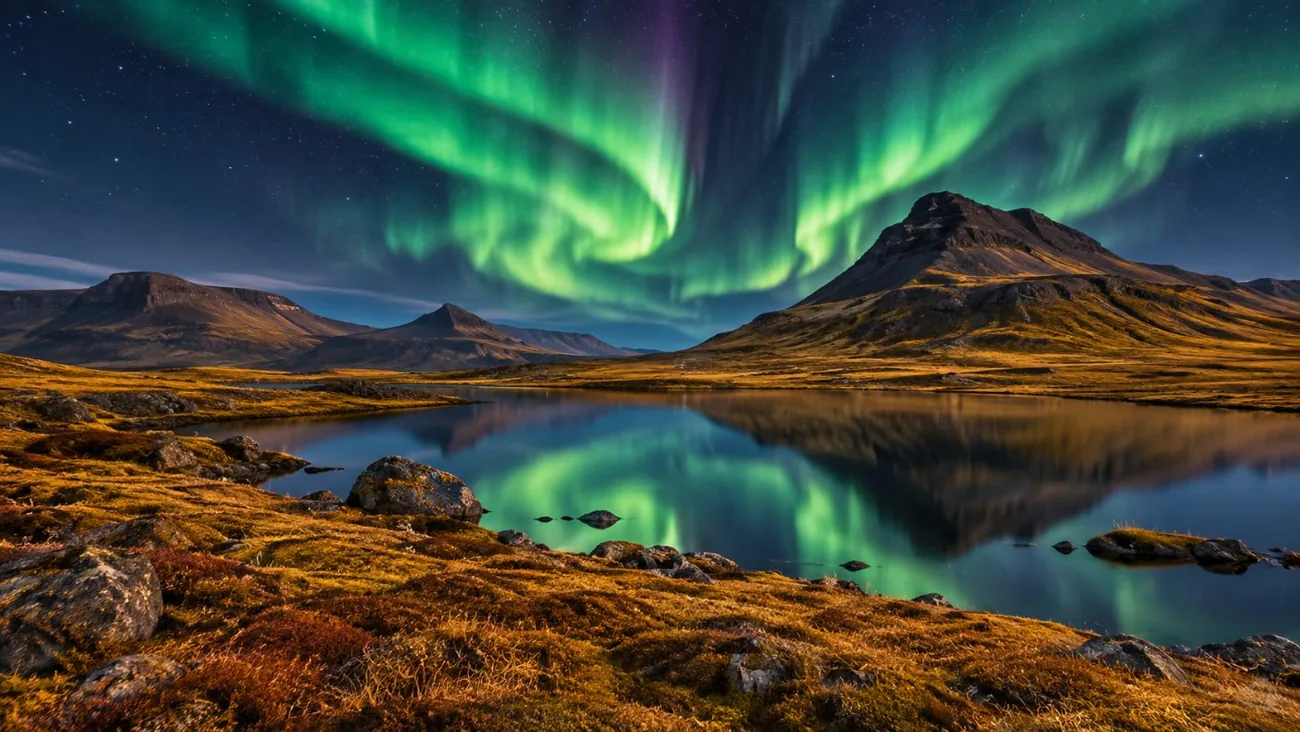
Booking choice: The 4x4 aurora tour, from $155 per person. Check dates Tour details
Every autumn the same worry comes up: did I miss it? Solar maximum made headlines through 2024 and 2025, and now the news says the sun is calming down. If you have flights to Reykjavík this winter, that sounds like bad timing.
Mostly, it isn't. Below is what the official space weather centres say about the cycle, the biggest storms of 2026 so far, and the three things that decide your night far more than the sun does: cloud, darkness and the moon.
The quick answer
Yes, 2026-27 is a good winter for the northern lights in Iceland. Solar Cycle 25 peaked in October 2024 and is now declining, but 2026 has already brought a G4 storm in January and Kp 7 nights in March and October. Reykjavík sits under the auroral oval, so modest activity is enough. Cloud is the real limit: book a tour with a free retry early in your stay.
Is 2026 a good year to see the northern lights in Iceland?
Yes. The sun is past its peak, but activity is still high, and Iceland sits so far north that ordinary nights can bring a good display.
Iceland lies under the auroral oval, the ring around the magnetic pole where the lights show up most nights. That changes the maths. In Scotland or Germany you need a big storm. Over Reykjavík, the Icelandic Met Office says on its aurora forecast explainer that "even grade 2 (low activity) can be beautiful" on its 0 to 9 scale, and that grade 3 "can be dazzling".
The sun is not switching off either. The Royal Observatory of Belgium's solar data centre (SIDC) expects further periods of enhanced solar and geomagnetic activity over the next two years, and notes that the Ap index, a daily measure of geomagnetic disturbance, reached a new high for this cycle after the severe storms of November 2025 and January 2026.
What fewer sunspots mean in practice: fewer of the rare nights when the aurora reaches Italy or Texas. For someone standing in a lava field outside Reykjavík, the typical night barely changes. What ruins trips here is cloud.
When did Solar Cycle 25 peak, and what happens in the declining phase?
The smoothed sunspot number peaked at 161 in October 2024. The years after a peak still bring big storms, sometimes the biggest of the whole cycle.
The Belgian solar centre confirmed October 2024 as the maximum, with a 13-month smoothed sunspot number of 161. NOAA's Space Weather Prediction Center had worked from a 2019 panel forecast of a July 2025 peak at 115. The real cycle came a little earlier and clearly stronger. The UK Met Office still calls it "a relatively typical solar cycle so far".
History is on your side. Cycle 23 peaked in 2001 and produced the back-to-back G5 storms of Halloween 2003, two years later. Cycle 24's two largest flares came in September 2017, more than three years after its maximum. Solar physicist Ryan French told Space.com that flares and eruptions will get rarer, but "strong individual events will still occur."
| When | What happened | Source |
|---|---|---|
| December 2019 | Solar Cycle 25 begins at solar minimum | Space.com |
| May 2024 | G5 (extreme) storm, aurora far south of its usual range | Space.com |
| October 2024 | Cycle maximum: smoothed sunspot number 161 | SIDC / STCE |
| 11 November 2025 | G4 (severe) storm after an X5.1 flare | Space.com |
| 19 to 20 January 2026 | G4 (severe) storm, strongest of 2026 so far | NOAA SWPC |
| 2029 to 2032 | Solar Cycle 26 expected to begin | NOAA SWPC |
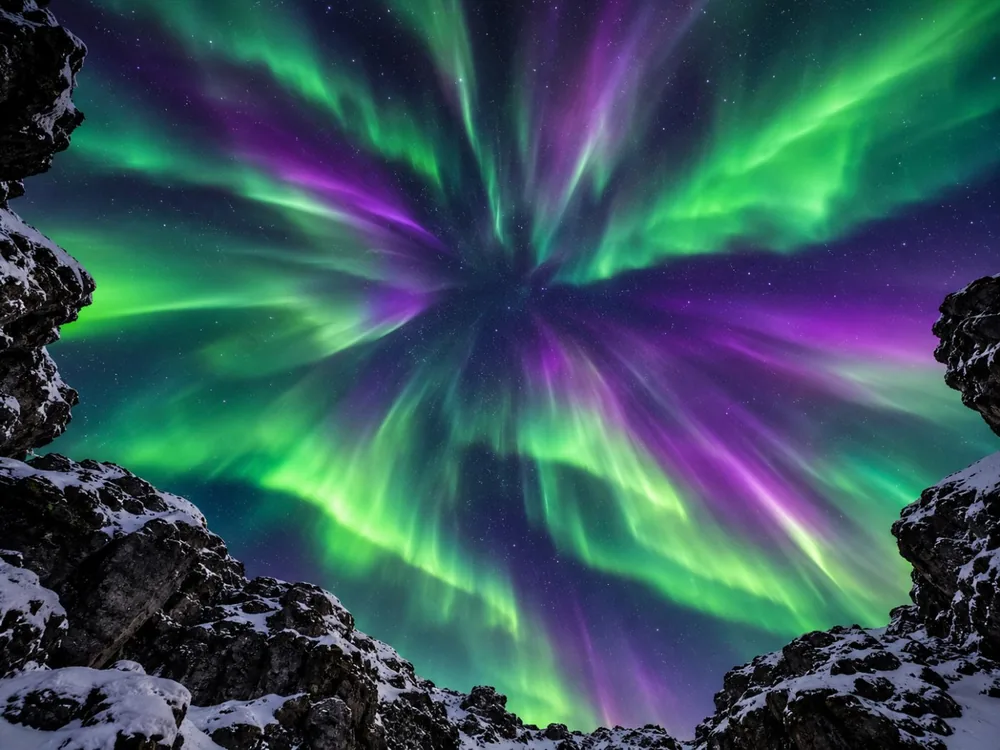
What were the biggest aurora storms of 2026 so far?
19 to 21 January (G4), 21 and 22 March (Kp 7), 4 July (G3) and 10 October (Kp 7+). Only the winter ones counted in Iceland.
NOAA's Space Weather Prediction Center reported G4 (severe) levels at 19:38 UTC on 19 January 2026, when the shock of a coronal mass ejection reached Earth. Reykjavík runs on UTC, so that was 19:38 local time, well after dark. The storm carried on into 20 January, the strongest day of the year so far on SpaceWeatherLive's 2026 storm ranking.
The 4 July storm shows the other half of the story. It reached G3 and put the aurora over California and New Mexico, Watchers reported. In Reykjavík nobody saw a thing: in early July the sky never gets dark. Our darkness calendar shows when the dark comes back.
Then 10 October opened this season with a Kp 7+ night. Expect more nights like that this winter, with long quiet gaps in between.
| Date (2026) | How strong | Dark in Reykjavík? |
|---|---|---|
| 19 to 21 January | G4 severe (NOAA), the year's strongest | Yes, about 12 hours of full dark |
| 21 and 22 March | Kp 7, strong | Yes, from about 22:45 |
| 4 July | G3 strong, Kp 7 | No, bright summer night |
| 10 October | Kp 7+, strong | Yes, from about 21:00 |
Does a high Kp index matter for seeing the northern lights in Reykjavík?
Less than most apps suggest. Over Reykjavík a Kp of 2 or 3 is often enough. Cloud cover and city light decide more nights.
Visit Reykjavík puts it plainly: clear skies matter more than a high Kp, and Kp 3 or above is usually a good sign. The Icelandic Met Office forecast shows the cloud map that matters, with green for cloud and white for clear sky. Our forecast guide walks through it.
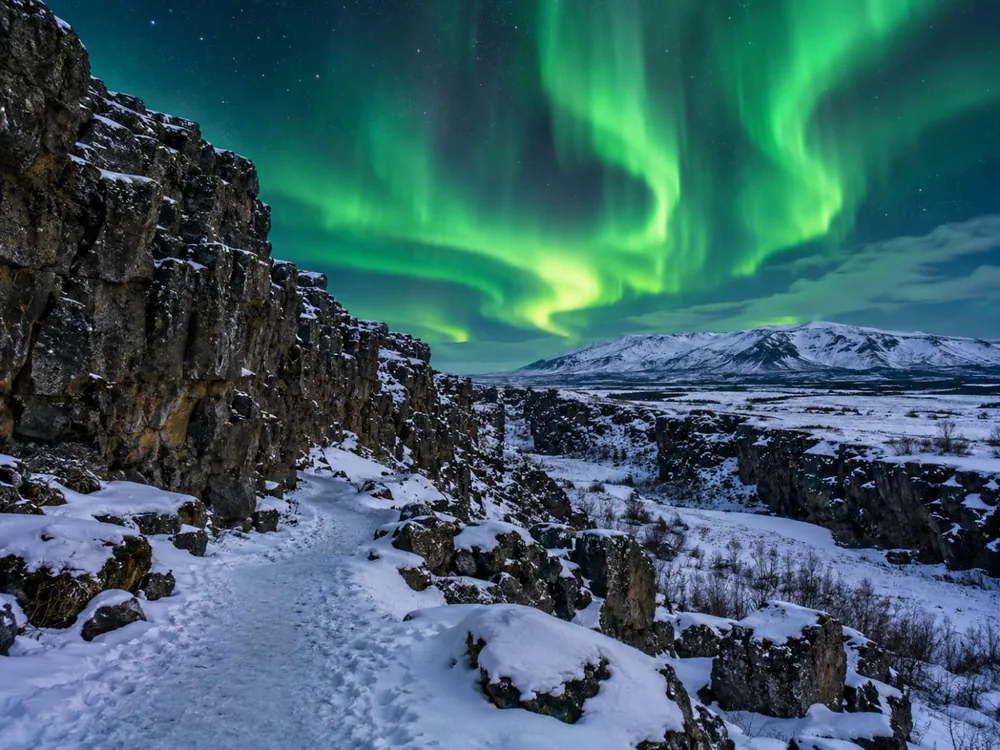
This is where a tour earns its price. A guide watches that map all evening and drives to the gap. In a minibus or 4x4 that can mean an hour inland to Þingvellir or out along the Reykjanes coast. From the hotel window, a Kp 5 under full cloud is worth nothing.

Our pick for this winter: a small group in a lifted 4x4 minibus, hot cocoa and pastries, your photo under the lights, and a free retry for two years.
Explore the 4x4 aurora tour Tour detailsWhich months of winter 2026-27 give the best odds?
October, November, February and March. Equinox months bring more geomagnetic activity, and their nights are already long.
Geomagnetic storms bunch up around the spring and autumn equinoxes. Scientists have seen that twice-yearly rhythm for more than a century, and the usual explanation is the Russell-McPherron effect from 1973, about how Earth's tilt lines its magnetic field up with the sun's (EarthSky has a good summary).
December and January give you the longest nights, close to 13 hours of full darkness around the solstice. They also give you four-hour days for everything else. Each month has one dark week around the new moon. The table shows mid-month darkness and the new moon dates; our best month guide covers weather and prices.
| Month | Fully dark (mid-month) | New moon | Our take |
|---|---|---|---|
| October 2026 | 20:47 to 05:37 | 10 October | Equinox month, mild, a good start |
| November 2026 | 19:24 to 06:59 | 9 November | Long nights, still autumn |
| December 2026 | 18:56 to 07:49 | 9 December | Longest nights, shortest days |
| January 2027 | 19:29 to 07:45 | 7 January | Deep winter, long nights |
| February 2027 | 20:43 to 06:41 | 6 February | Long nights, daylight coming back |
| March 2027 | 22:15 to 05:00 | 8 March | Equinox month, nights shrinking fast |
How should you book an aurora tour this winter?
Early in your trip, with a free retry, and with the cloud forecast in mind rather than the solar cycle.
No tour can promise the lights. What you are really choosing is the vehicle, the group size and the rule for a second try. Book for your first or second night, so a retry still fits before you fly home.
- 4x4 tour with treats (Nordur Travel, from $155): free retry for two years.
- Super jeep tour (Arctic Adventures, from $205): free retry for three years, on their minibus tour.
- Gray Line coach tour (from $80): sold as a "lifetime guarantee", but Gray Line's own terms say free rebooking within two years.
- Second-chance boat tour (Special Tours, from $104): a free ticket for another sailing, no expiry.
- Yacht cruise (Sea Trips, from $96): free reschedule.
Operators decide in the afternoon whether a tour runs. Arctic Adventures cancels by 18:15 for bad weather, and Gray Line decides the day before. If they cancel, you get a new date or your money back; if the tour runs and the sky stays shut, you get the retry. Our guarantee guide compares the small print.
A super jeep reaches tracks a coach cannot, and its free retry lasts three years.
Check dates for the super jeep tourFrequently asked questions
Will the aurora be visible in Iceland in 2026?
Yes. From late August to mid-April the nights are dark enough, and Iceland sits under the auroral oval. Whether you see it on a given night depends mostly on cloud.
Is 2026 a good year to see aurora?
Yes. Solar Cycle 25 peaked in October 2024, but 2026 has had a G4 storm in January and several Kp 7 nights since. Big storms often come in the years after a peak.
When is the next solar maximum?
Not soon. NOAA expects Solar Cycle 26 to begin between January 2029 and December 2032, and its peak would come several years after that.
Does the solar cycle matter more than the weather in Reykjavík?
No. Over Reykjavík even low activity can give a good show, so clear sky is the deciding factor on most nights. Check the Icelandic Met Office cloud map in the afternoon.
Ready to book
Choose your tour
Free cancellation up to 24 hours before on every option. Prices are from-prices in USD and move with the season.
Northern Lights 4x4 Tour with Hot Cocoa
- Pickup and drop-off in Reykjavík (28 pickup points)
- Specially modified 4x4 minibus, Wi-Fi on board
- Hot chocolate, Icelandic pastries and 2 hand warmers

Northern Lights Super Jeep Tour
Big tyres for tracks a bus cannot take, retries valid 3 years

Northern Lights Yacht Cruise from the Old Harbour
- Two-hour cruise from the Old Harbour
- Hotel pickup if you choose that option
- Warm blankets, Wi-Fi and sea sickness tablets